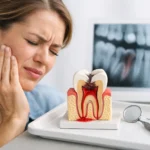
When a tooth keeps hurting, the difficult part is often not knowing whether it needs treatment. It is knowing what to do next.
Perhaps the pain has been building for several days. Maybe biting on the tooth has become uncomfortable, hot or cold drinks are causing lingering sensitivity, or your dentist has already suggested that root canal treatment may be needed.
If you are searching for root canal treatment in North Brisbane, you may also be wondering how quickly the tooth should be assessed and whether seeing an endodontist is the appropriate next step.
At myEndodontist, we provide specialist endodontic care from our practice in North Lakes. We see patients from across Greater Brisbane and focus specifically on diagnosing and treating problems involving the dental pulp and root canal system, with the aim of preserving natural teeth where clinically appropriate.
Before deciding on treatment, the first step is understanding what is happening to the tooth.
Why Tooth Pain Needs a Proper Diagnosis First
Tooth pain can be difficult to interpret.
A tooth may hurt because the pulp inside it has become inflamed or infected. Deep decay, cracks, fractures, dental trauma and other damage can expose or irritate this tissue. A previously treated tooth can also develop new problems.
Symptoms that may lead someone to seek assessment include persistent toothache, lingering sensitivity to hot or cold, discomfort when biting, tenderness or swelling around the tooth.
But symptoms alone cannot confirm whether root canal treatment is needed. That decision depends on the diagnosis.
When Tooth Pain May Need Endodontic Assessment
Endodontics deals specifically with the tissues inside the tooth and around its roots. Specialist assessment may therefore be appropriate when there is concern that the pulp or root canal system is involved.
Sometimes the situation is relatively clear. A dentist may have examined the tooth and recommended referral to an endodontist. In other cases, the source of discomfort can be less obvious.
We consider the history of the tooth, your symptoms and the clinical findings. Appropriate imaging can help us examine the root structures and surrounding tissues when more information is needed.
The goal is to determine what treatment is appropriate for the tooth, rather than assuming that root canal treatment is required.
How Urgent Is Root Canal Treatment?
There is no single timeframe that applies to every tooth.
The urgency depends on what is causing the symptoms, how the condition is progressing and what we find during assessment.
Persistent or worsening tooth pain deserves professional attention rather than prolonged guesswork. Swelling, significant tenderness or other changing symptoms are also reasons to arrange an assessment.
Waiting for pain to become severe is not a reliable way to judge the condition of a tooth. Some endodontic problems produce strong symptoms, while others may cause comparatively little discomfort.
Australian Institute of Health and Welfare data provides some useful context. Among Australian adults with their own teeth, 44% of those who usually visited the dentist because of a problem had untreated dental decay, compared with 24% of those who usually attended for a check-up. These figures do not indicate whether an individual tooth needs root canal treatment, but they reinforce why waiting for symptoms alone is not the best way to judge a dental problem.
If you are unsure whether a tooth can wait, an assessment can help clarify the urgency.
Been Told You May Need a Root Canal? A Specialist Assessment Can Clarify the Next Step
Being told that you might need root canal treatment can raise several questions at once.
Is the treatment definitely necessary? Can the tooth be saved? Will it hurt? Should you see your regular dentist or a root canal specialist in Brisbane?
A specialist assessment can help answer those questions.
What Happens During a Root Canal Assessment in North Brisbane?
When you attend our North Lakes practice, we first work to understand the tooth and the problem you are experiencing.
We review your symptoms and relevant dental history, examine the tooth and use appropriate diagnostic information to assess the pulp, roots and surrounding structures.
Digital imaging may form part of this process. Where clinically appropriate, 3D imaging can provide additional information about anatomy or areas that are difficult to evaluate in two dimensions.
Once we have enough information, we can explain what we have found and discuss the available treatment options.
That may include root canal treatment if the pulp is irreversibly inflamed, infected or necrotic and the tooth is suitable for preservation. In other situations, another treatment approach may be more appropriate.
Patients can also come to us for a second opinion. You do not need to be certain that you require root canal treatment before requesting an assessment.
How Root Canal Treatment Helps Preserve a Tooth
Root canal treatment is used to manage disease inside the tooth while allowing the natural tooth to remain in place where possible.
The treatment focuses on the pulp chamber and the small canal spaces that run through the roots.
What Happens During Specialist Root Canal Treatment?
Root canal treatment is carried out using local anaesthetic.
We create access to the internal part of the tooth and remove diseased or necrotic pulp tissue. The root canal system is then carefully cleaned, shaped and disinfected.
Once prepared, the canals are filled and sealed with appropriate materials. A temporary restoration or seal may also be used during the treatment process.
Root canal treatment is commonly completed over one or two appointments, although individual cases vary. The condition of the tooth, the presence of infection and the complexity of its anatomy can all influence treatment planning.
Our role is to explain the treatment plan before treatment begins so you understand why each stage is being recommended.
Can Root Canal Treatment Save the Natural Tooth?
Saving the natural tooth is the reason root canal treatment is performed.
When disease is confined to a tooth that remains suitable for restoration, treating the infected or inflamed internal tissue may allow that tooth to remain functional rather than being extracted.
There are limits.
A tooth may have structural damage, cracks or other problems that affect whether preservation is realistic. No treatment can guarantee the long-term survival of an individual tooth.
That is why suitability for treatment needs to be assessed before root canal treatment is recommended.
When Specialist Root Canal Assessment May Be Helpful
Endodontists undertake additional specialist training focused on conditions affecting the dental pulp, root canal system and surrounding tissues.
That focused area of practice can be particularly relevant when the anatomy is difficult, symptoms are unclear, a tooth has already been treated or complications make the case more challenging.
Why See a Root Canal Specialist in Brisbane?
General dentists and endodontists have different but complementary roles.
Your general dentist manages your broader dental health and restorative care. An endodontist focuses specifically on the diagnosis and treatment of endodontic problems.
At myEndodontist, endodontic care is our clinical focus.
Patients may be referred to us because a tooth has narrow or curved canals, previous root canal treatment, persistent symptoms, difficult-to-identify anatomy or another factor that warrants specialist assessment.
We also see patients who contact us directly because they want an endodontic opinion before deciding how to proceed.
| Situation | Why specialist assessment may be considered |
| Narrow or curved canals | The internal anatomy may be more difficult to identify and treat |
| Previous root canal treatment | Existing material may need to be removed before the tooth is reassessed |
| Persistent symptoms | The cause may require further investigation |
| Difficult-to-identify anatomy | Magnification and imaging may provide additional information |
| Uncertainty about treatment | A specialist opinion can help clarify the next step |
When treatment is completed, our involvement does not replace your regular dentist. We work within a collaborative care pathway and generally return patients to their dentist for the restorative phase and ongoing dental care.
Why Magnification Matters in Complex Root Canal Treatment
From the outside, a tooth can look relatively uncomplicated.
Inside, the root canal system may be narrow, curved, branching or partly calcified. Individual teeth vary, and some anatomy can be difficult to identify using ordinary visualisation alone.
This is one reason specialist endodontic treatment relies on magnification and diagnostic imaging.
How Dental Microscopes and 3D Imaging Support Endodontic Care
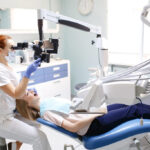
At myEndodontist, we use dental operating microscopes with magnification and specialised illumination during endodontic treatment.
The microscope helps us visualise the small internal structures of a tooth in greater detail. This can assist when locating and treating complex canal anatomy.
We also use digital imaging, with 3D dental scanning available when clinically indicated. A three-dimensional view may provide additional information about root anatomy and the structures surrounding the tooth.
Technology does not guarantee a particular clinical outcome. Its role is to provide information and visual access that can support diagnosis, treatment planning and precise clinical work.
Why Some Root Canal Cases Are Referred to an Endodontist
Complexity can arise for many reasons.
A canal may be unusually narrow or curved. Calcification may make access more difficult. A tooth that has undergone previous root canal treatment may require the existing filling material to be removed and the internal anatomy reassessed.
There may also be persistent symptoms even when the cause is not immediately obvious.
These are situations where focused endodontic assessment can help determine what is occurring and whether further treatment is appropriate.
Worried About Root Canal Treatment? Your Comfort Should Be Part of the Conversation
Some patients are more worried about the treatment itself than the diagnosis.
Fear of pain, injections or previous difficult dental experiences can make it tempting to postpone an appointment. If that sounds familiar, tell us about those concerns before treatment begins.
Root Canal Treatment for Nervous or Anxious Patients
We treat patients who experience dental anxiety, and our North Lakes practice includes a low-sensory surgery designed with nervous patients in mind.
Root canal treatment is performed with local anaesthetic, and additional pain-management or sedation options may be discussed where appropriate for the individual patient and planned procedure.
We do not assume that everyone experiences dental treatment in the same way.
We explain the proposed treatment, why it is recommended and what you can reasonably expect before you decide to proceed.
Specialist Root Canal Care in North Lakes
Location becomes very practical when you are experiencing tooth pain or arranging treatment that may involve more than one visit.
Our specialist practice is based in North Lakes on Brisbane’s northside, within the North Lakes Specialist Medical Centre at 6 North Lakes Drive.
We welcome patients from North Lakes, Greater Brisbane and other parts of Queensland.
Root Canal Treatment in North Lakes for North Brisbane Patients
For patients looking for root canal treatment in North Lakes or elsewhere across Brisbane’s northside, our location provides access to a practice dedicated specifically to endodontic care.
Our standard opening hours are Monday to Friday, 8 am to 5 pm, with late hours available by appointment. Parking is available at the medical centre, including dedicated basement patient parking.
You can find our address, parking information and other practical details on our Contact Us page.
Do I Need a Referral to See an Endodontist in Brisbane?
No referral is required if you would like to request an assessment or second opinion with us.
You can contact myEndodontist directly.
We also work with general dentists who refer patients for specialist endodontic assessment or treatment. In those situations, we provide the endodontic care before returning the patient to the referring dentist for the next stage of treatment.
Whether you contact us directly or arrive through a referral, the first step is understanding what is happening with the tooth.
Your Root Canal Appointment Is Only One Part of Saving and Restoring the Tooth
Completing a root canal does not necessarily mean that all treatment for the tooth is finished.
Root canal treatment addresses the internal disease. The tooth may then need an appropriate permanent restoration to protect it and restore function.
What Happens After Root Canal Treatment?
Once our endodontic treatment is complete, you will generally return to your regular dentist for the final restoration or crown where one is required.
Your dentist also continues to look after your broader oral health.
This reflects the way our practice operates. We concentrate on specialist endodontic care, while general dentists continue to provide the restorative and ongoing dental treatment their patients need.
If your dentist referred you to us, this return pathway helps maintain continuity between specialist treatment and the rest of your dental care.
If You Are Unsure Whether to Keep Waiting, Start by Finding Out What Is Happening With the Tooth
You do not have to diagnose your own tooth before contacting an endodontist.
You also do not need to know whether root canal treatment is definitely required.
If pain keeps returning, symptoms are worsening, your dentist has recommended endodontic treatment or you want another opinion about whether a tooth may be preserved, an assessment can clarify the next step.
We can assess what appears to be causing the problem, determine whether endodontic treatment is appropriate and explain the treatment pathway based on the clinical findings.
If you are looking for root canal treatment in North Brisbane, you can request an appointment with us at myEndodontist in North Lakes.
We can assess the tooth, explain what we find and discuss the next step that is appropriate for your circumstances.
Questions About Root Canal Treatment in North Brisbane
What Symptoms May Mean I Should Have a Tooth Assessed?
Persistent toothache, lingering sensitivity to hot or cold, discomfort when biting, tenderness and swelling can occur when there is a problem involving the dental pulp or surrounding tissues.
Cracks, trauma and problems with previously treated teeth can also warrant assessment. Symptoms cannot confirm the diagnosis by themselves, so an examination is needed to determine the cause.
How Quickly Should I See an Endodontist if My Tooth Is Painful?
The appropriate timeframe depends on the cause and severity of the problem.
Persistent, worsening or significant symptoms should be professionally assessed rather than monitored indefinitely. If you are uncertain about the urgency, contacting the practice and explaining your symptoms can help establish an appropriate appointment pathway.
Can I See an Endodontist Without a Dentist Referral?
Yes.
Patients can request an assessment or second opinion with us directly without a dentist referral. We also accept referrals from general dentists for specialist endodontic assessment and treatment.
How Long Does Root Canal Treatment Usually Take?
Root canal treatment is commonly completed over one or two appointments.
The exact treatment plan depends on the tooth, its anatomy, the presence of infection and other clinical factors identified during assessment.
What if I Am Nervous About Root Canal Treatment?
Tell us about your anxiety before treatment begins.
We use local anaesthetic for root canal treatment, and our practice includes a low-sensory surgery for nervous patients. Other appropriate pain-management or sedation options can be discussed according to your circumstances and treatment needs.
If you are concerned about a tooth and would like specialist assessment at our North Lakes practice, you can request an appointment with our team.